

The design and construction process starts long before ground is broken.
Successful restaurants, senior living, and healthcare organizations begin by recognizing that dining expectations have changed.
Patients in hospitals today and residents in communities today are not comparing on-site dining to what existed ten years ago. They compare it to the restaurant down the street, the coffee shop they visit every week, and the convenience they experience everywhere else in life.
Gone are the days of the large dining rooms with a sea of tables and chairs.
Dining Design Starts with the Guest, Not the Floor Plan
One of the biggest mistakes in planning a dining space is starting with the room instead of trying to understand the people who will use it.
Before we ever get into the layout, we want to understand who the guest is today, who the guest will be tomorrow, and what they are going to expect from the experience.
Today’s residents and the generations behind them are bringing a very different point of view into communities. They are used to more choice, better food, and more convenience. They are not just asking whether the dining room looks nice. They are asking whether the experience feels current, whether the food feels competitive, and whether the space fits how they actually want to live.
And part of that shift is behavioral. Residents still want great food and a strong dining experience, but they do not always want that experience in the dining room every night. Sometimes they want to take dinner back to their apartment, relax, and enjoy it there. It is not because they do not value the dining room. It is because convenience and comfort now play a much bigger role in how people choose to dine.
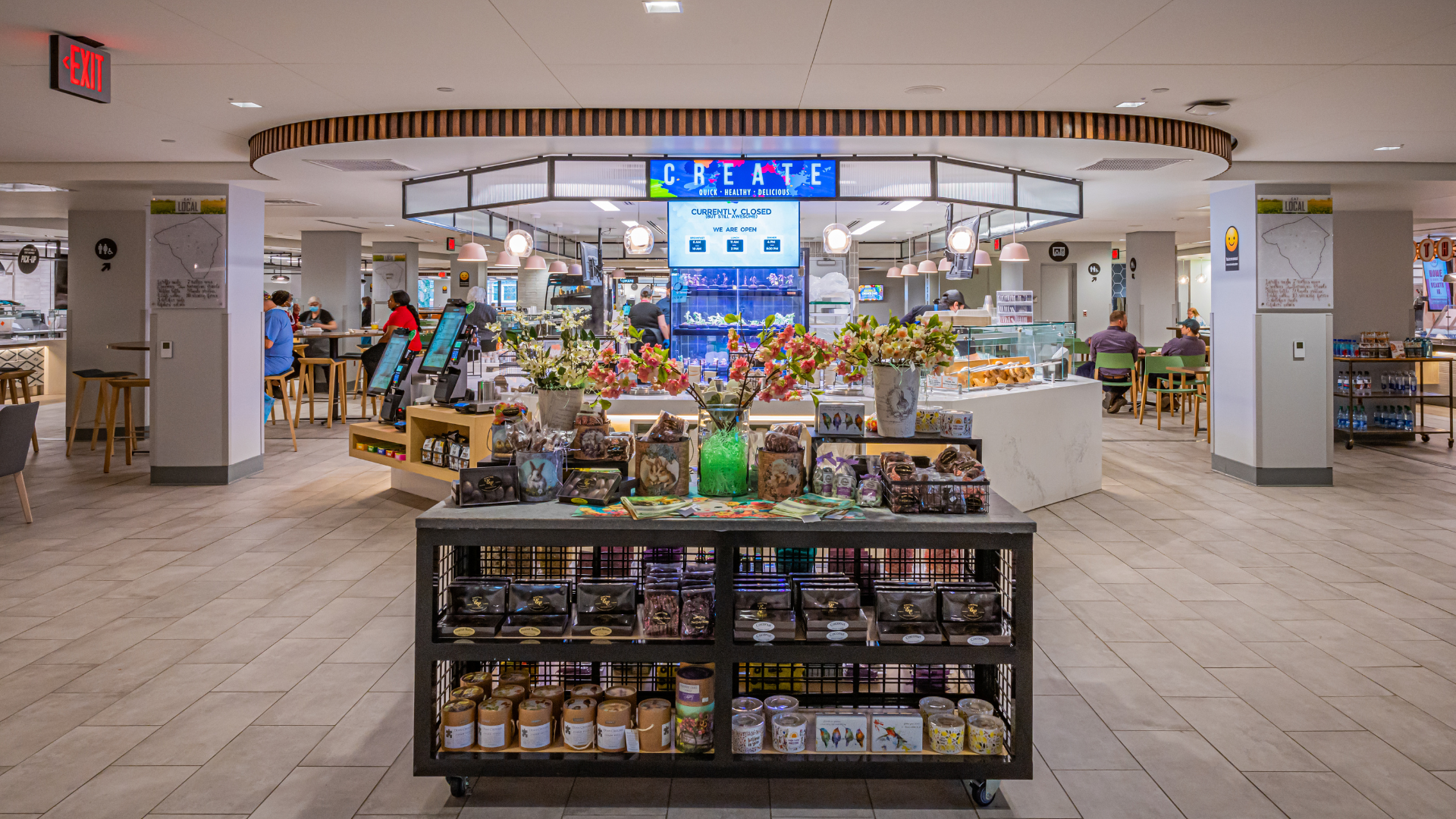
The same is true of bar and lounge spaces. In many communities, those areas are now more appealing than a traditional dining room table. People may want to sit at the bar, have a drink, order food, and enjoy a setting that feels more casual and social.
If those behaviors are not accounted for early, spaces get sized wrong. Dining rooms may end up too small and struggle with overflow, or too large because demand has shifted elsewhere. Bar areas can be undersized. Kitchens may be missing the dedicated space needed to support curbside and to-go orders.
What looks like a design issue later usually starts as a customer insight issue at the beginning.
That is why we look at more than square footage. Geography matters. Menu trends matter. Eating habits matter. In a market shaped by residents coming from large cities, for example, expectations around delivery, convenience, and variety may be very different than in other communities. If you get those assumptions wrong at the start, the design may still look good on paper, but it will miss the people it was built for.
Back-of-House Drives the Dining Experience
No matter how polished the front-of-house is, the guest experience still depends on what happens in the back-of-house.
That is the engine of the operation. It is where labor, time and motion, equipment placement, order flow, and production all come together. If that engine is not designed efficiently, the guest experience feels it almost immediately.
That is why we always come back to a few foundational questions early in the process:
- What is the service model?
- What is the labor methodology or matrix?
- How are guests ordering, and where does that happen?
Too often, teams assume they will “just bring the food out” without thinking through what that really requires operationally. But the path from the kitchen to the guest is where a lot of dining experiences either succeed or break down.
The travel path, proximity of equipment, and layout of the production line are instrumental in creating a smooth process. If the expo is poorly placed, if pickup is awkward, or if staff are constantly crossing paths and doubling back, that inefficiency shows up fast in the quality of the experience.
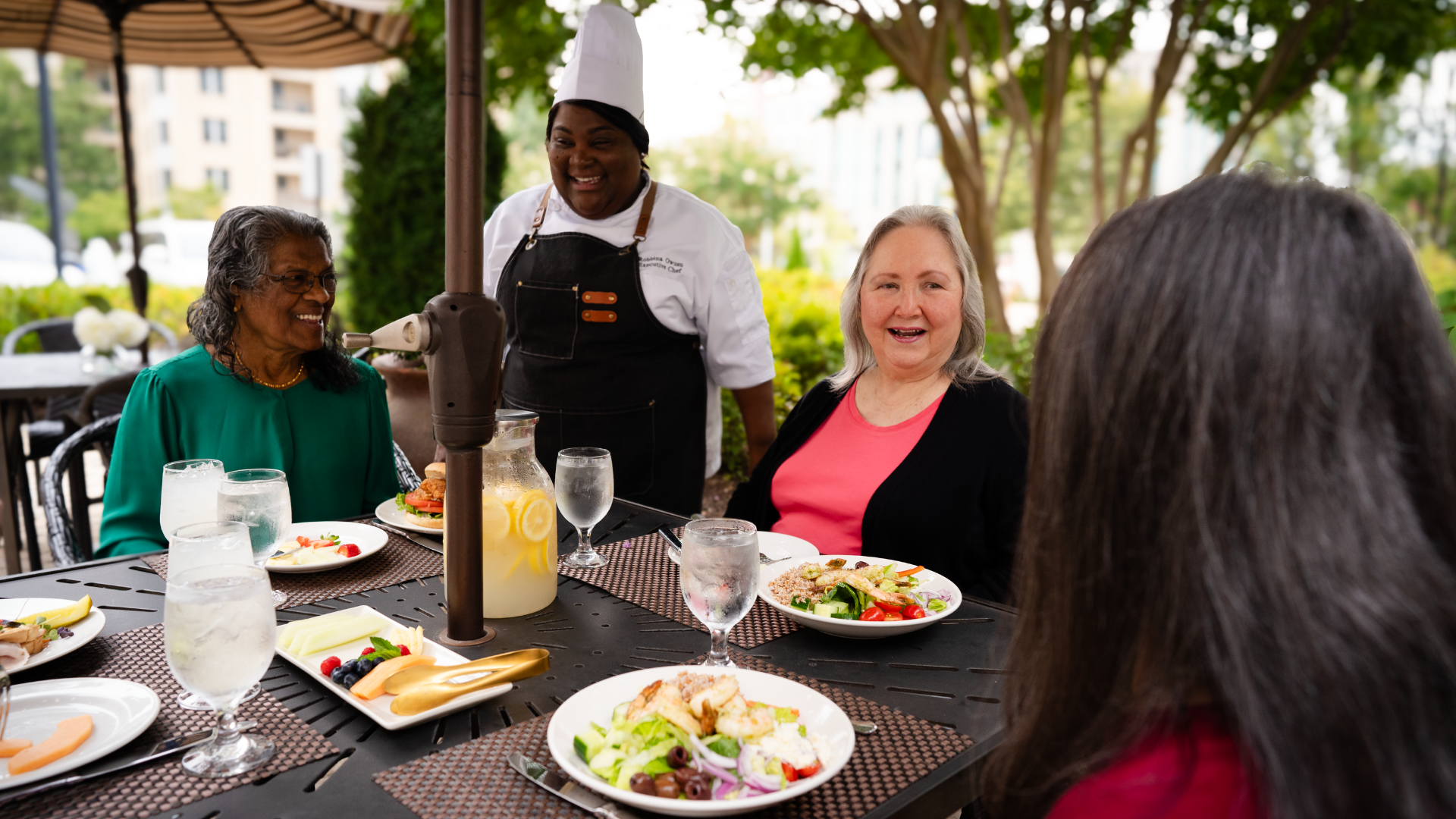
Order accuracy matters too, especially when dietary restrictions, preferences, and safety requirements all need to be handled correctly. That is why systems like KDS, order management, and ticket tracking are not just operational tools, they are part of the design conversation.
The kitchen also has to be designed around the menu, while still leaving room for change. If a kitchen is built too narrowly around one moment in time, it will create limitations almost as soon as the operation starts to grow or adapt.
And if all of that is not working together, the consequences are obvious.
You can design the best venue in the world, and if the food comes out slow and cold, then you’ve not really accomplished what you’re after.
That is really the point. Back-of-house planning is not separate from the dining experience. It determines whether the experience can actually be delivered.
Technology is Changing What is Possible in Dining Spaces
Upgrading a dining space no longer has to mean tearing everything out and starting over.
For a long time, that was the assumption. If a space was outdated or not originally designed to support a more active foodservice operation, the answer was often to gut it and rebuild. Today, that is no longer the only path.
Advances in hoodless and ventless equipment, mobile cook lines, hot and cold holding, and battery-supported solutions have made it possible to introduce new dining concepts in spaces that would have been much harder or more expensive to activate in the past.
As construction costs continue to rise, these technologies give operators more room to create something active, engaging, and operationally sound without defaulting to the most expensive answer.
Areas that were not originally designed as kitchens can now accommodate production in ways they could not before. That opens the door to pop-up concepts, ghost-kitchen style formats, mobile service, and other approaches that would have been much harder to execute a few years ago.
And the impact is not limited to kitchens.
We are seeing the same shift in retail, especially in hospitals. Frictionless retail and just-walk-out style technology are already serving caregivers, nurses, surgeons, doctors, patients, families, and visitors who need access to fresh food around the clock.
In many cases, it is now possible to drop in cook lines, serving lines, or hot-hold production in ways that create real flexibility, especially for clients trying to refresh a venue, add a concept, or rethink an underused space without taking on a full-scale rebuild.
Everyone says residents of senior living communities will be scared of this type of technology and not use it. They shop on Amazon almost every day. They know how to pay at the pump. They use self-checkout at the grocery store. Anybody who decided for them that they wouldn’t figure it out was very wrong.
Of course, technology alone is not the strategy. The real opportunity is using it in a way that gives clients more flexibility, lowers barriers to implementation, and creates better experiences without forcing every project into an all-or-nothing construction model.
The Challenge Ahead: Keeping the Human Touch
Automation will keep reshaping foodservice, especially in repetitive back-of-house tasks.
But the real question is not whether technology is coming. It is how we use it without making dining feel like an assembly line.
People want convenience, but they still want connection. They want speed and efficiency, but not at the expense of warmth, hospitality, and intentional experiences.
That will be the balancing act in the years ahead. The spaces that perform best will not be the ones that adopt technology for its own sake. They will be the ones that use it to support the experience without stripping away the personal touch that makes dining feel human.
That is what drives us at The Hub. We are foodies at heart. We just happen to also be design and construction professionals. We understand that eating is a journey, an experience – it is not just consumption.